Tired of Trying Diet After Diet? Here’s Why Sustainable Weight Loss Is Your Real Solution

By Glenis Graham, Nutrition Specialist and Wellness Coach
Are you exhausted from the endless carousel of diets that promise quick results but leave you feeling defeated, frustrated, and heavier than when you started? If you’re nodding your head right now, you’re not alone. Approximately 49.1% of Americans actively attempt to lose weight each year, yet studies reveal that 80% of weight lost through dieting is regained within five years. This isn’t a failure on your part—it’s a fundamental flaw in the quick-fix diet industry that has dominated our culture for decades.
After working with thousands of clients over my 15 years as a nutrition specialist, I’ve witnessed firsthand the emotional and physical toll that diet cycling takes on people. I’ve seen brilliant, determined individuals blame themselves for “lacking willpower” when the real culprit is a system designed to fail. Today, I want to share with you the truth about sustainable weight loss and provide you with a roadmap that actually works—not just for weeks or months, but for life.
The promise of losing 20 pounds in 30 days or achieving a flat stomach with a magic pill might sound appealing, but these approaches ignore the complex biological, psychological, and lifestyle factors that contribute to lasting health transformation. Instead of chasing the next fad, it’s time to embrace an evidence-based approach that honors your body’s natural processes while creating sustainable habits that support your long-term well-being.
The Cycle of Diet Frustration: Why Quick Fixes Fail
The Biology Behind Diet Failure
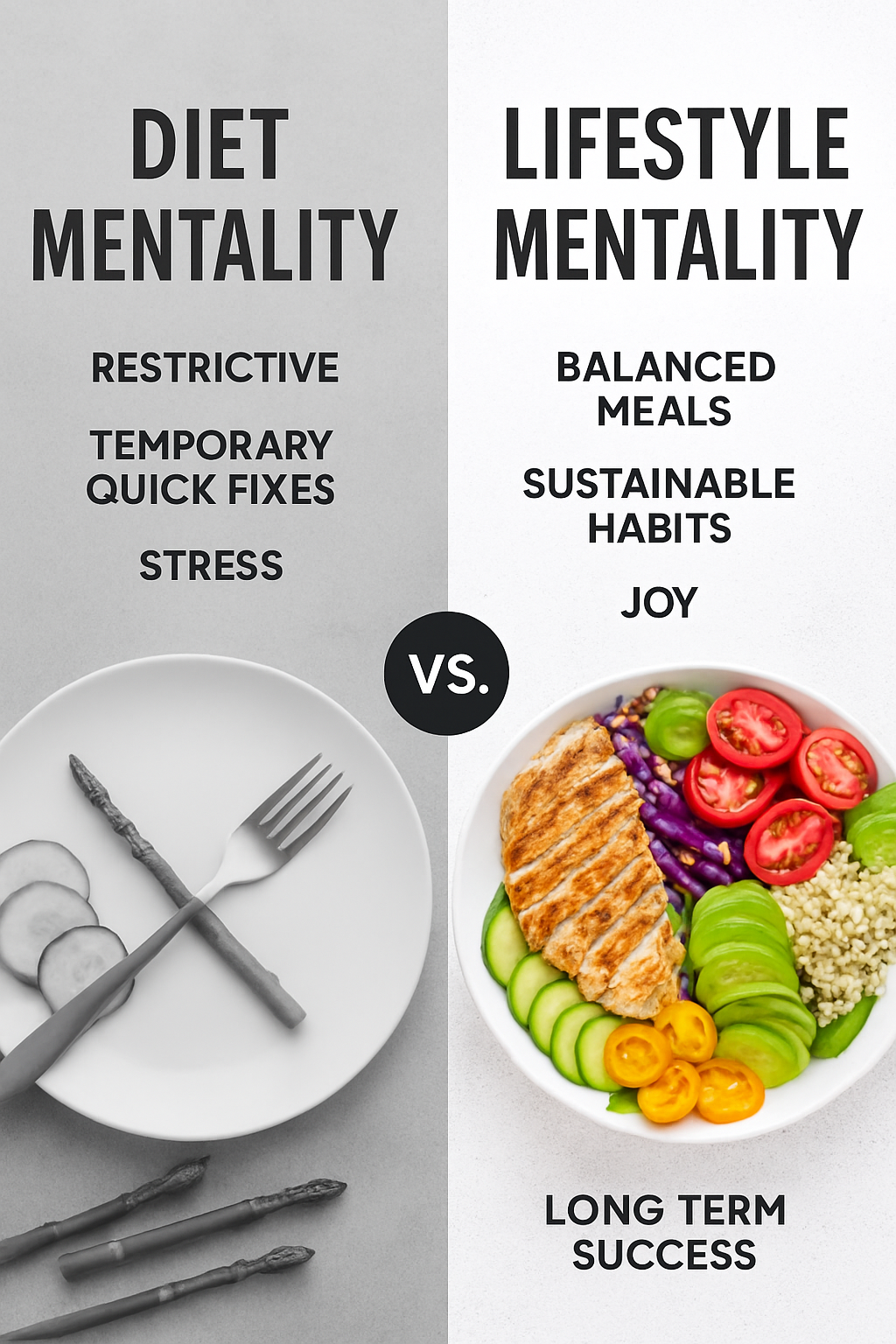
When you drastically restrict calories or eliminate entire food groups, your body doesn’t interpret this as a conscious choice to lose weight—it perceives it as a threat to survival. This triggers a cascade of biological responses designed to protect you from starvation:
Metabolic Adaptation: Your metabolism slows down by 15-30% to conserve energy, making it increasingly difficult to lose weight and easier to regain it once you return to normal eating patterns.
Hormonal Disruption: Restrictive dieting affects key hormones including: – Leptin (the satiety hormone) decreases, making you feel hungrier – Ghrelin (the hunger hormone) increases, intensifying cravings – Cortisol (the stress hormone) elevates, promoting fat storage, particularly around the midsection
Muscle Loss: Rapid weight loss often results in significant muscle loss, which further slows your metabolism since muscle tissue burns more calories at rest than fat tissue.
The Psychology of Diet Cycling
Beyond the biological factors, diet cycling creates a destructive psychological pattern:
- Initial Optimism: You start a new diet with high hopes and motivation
- Short-term Success: You see initial results, reinforcing your belief in the approach
- Plateau and Struggle: Progress stalls, cravings intensify, and adherence becomes difficult
- Guilt and Shame: You blame yourself for “failing” rather than recognizing the diet’s inherent flaws
- Abandonment: You give up and often rebound to previous or worse eating habits
- Renewed Hope: A new diet promises different results, and the cycle begins again
This pattern doesn’t just affect your weight it damages your relationship with food, erodes your self-confidence, and can lead to disordered eating behaviors.
The Financial Cost of Diet Culture
The weight loss industry generates approximately $85 billion annually in the United States, with projections reaching $107.7 billion by 2026. This massive industry thrives on repeat customers—people who lose weight temporarily only to regain it and purchase the next solution. The average person spends thousands of dollars on diet programs, supplements, and products throughout their lifetime, often with little to show for it except frustration and financial strain.
Why “Willpower” Isn’t the Problem
One of the most damaging myths perpetuated by diet culture is that weight loss failure is due to lack of willpower. Research consistently shows that willpower is a finite resource that becomes depleted throughout the day. Expecting yourself to maintain perfect dietary adherence through willpower alone is like expecting to hold your breath indefinitely—it’s biologically impossible.
Successful weight management isn’t about having superhuman self-control; it’s about creating an environment and lifestyle that makes healthy choices easier and more automatic. This includes:
- Environmental Design: Keeping nutritious foods readily available while limiting access to highly processed options
- Habit Formation: Building sustainable routines that don’t require constant decision-making
- Stress Management: Addressing the root causes of emotional eating and stress-induced cravings
- Social Support: Surrounding yourself with people who support your health goals
Beyond the “Flat Tummy Diet” Fad: A Holistic Approach
The Truth About Spot Reduction
Let’s address one of the most persistent myths in the fitness industry: the idea that you can target fat loss in specific areas of your body. Despite what countless “flat tummy diet” programs claim, spot reduction is physiologically impossible. Your body loses fat in a genetically predetermined pattern that you cannot control through specific exercises or foods.
However, this doesn’t mean you can’t achieve a flatter, more toned midsection. The key lies in understanding the multiple factors that contribute to abdominal appearance:
Overall Body Fat Percentage: For most people, visible abdominal definition requires reducing overall body fat to specific ranges (typically 10-15% for men and 16-20% for women).
Muscle Development: Building core strength through comprehensive training improves posture and creates the appearance of a tighter midsection.
Digestive Health: Reducing bloating and improving gut health can significantly impact how flat your stomach appears on a daily basis.
Posture and Alignment: Poor posture can make even a lean midsection appear protruded, while proper alignment creates a naturally flatter appearance.
The Role of Inflammation in Belly Fat
Recent research has highlighted the connection between chronic inflammation and abdominal fat accumulation. Unlike subcutaneous fat (the fat you can pinch), visceral fat (the fat surrounding your organs) is metabolically active and produces inflammatory compounds that can:
- Increase insulin resistance
- Promote further fat storage
- Elevate cortisol levels
- Disrupt hormonal balance
- Increase disease risk
Anti-inflammatory strategies that support a flatter stomach include:
- Omega-3 Rich Foods: Fatty fish, walnuts, flaxseeds, and chia seeds help reduce systemic inflammation
- Colorful Vegetables: The antioxidants in deeply colored vegetables combat oxidative stress
- Probiotic Foods: Fermented foods like yogurt, kefir, and sauerkraut support gut health
- Stress Reduction: Chronic stress elevates cortisol, promoting visceral fat accumulation
- Quality Sleep: Poor sleep increases inflammatory markers and disrupts hunger hormones
Understanding Cortisol Belly
Cortisol belly has become a popular term describing the accumulation of abdominal fat due to chronically elevated stress hormones. When cortisol levels remain high due to chronic stress, several mechanisms promote belly fat storage:
- Increased Appetite: Cortisol stimulates cravings for high-calorie, high-sugar foods
- Fat Storage: Elevated cortisol preferentially stores fat in the abdominal region
- Muscle Breakdown: Chronic cortisol elevation can break down muscle tissue, slowing metabolism
- Sleep Disruption: High cortisol interferes with sleep quality, further disrupting hormonal balance
Strategies to manage cortisol belly include:
- Stress Management Techniques: Meditation, deep breathing, yoga, and mindfulness practices
- Regular Sleep Schedule: Maintaining consistent sleep and wake times
- Moderate Exercise: While exercise is beneficial, excessive high-intensity training can elevate cortisol
- Social Connection: Strong relationships and social support help buffer stress responses
- Nature Exposure: Studies show that spending 20-30 minutes in nature can reduce cortisol by 21.3%
Tackling Specific Challenges: Your Journey to a Flatter, Healthier Stomach
Foods to Avoid for Flat Stomach Goals
While no single food will make or break your progress, certain foods can contribute to bloating, inflammation, and fat accumulation around the midsection. Here are the key categories to limit:
1. Highly Processed Foods
- Refined carbohydrates: White bread, white pasta, pastries, and baked goods cause rapid blood sugar spikes and promote fat storage
- Packaged snacks: Often high in sodium, trans fats, and artificial additives that cause water retention and bloating
- Fast food: Typically loaded with unhealthy fats, sodium, and preservatives
2. Sugar-Sweetened Beverages
- Sodas and soft drinks: High in empty calories and cause insulin spikes
- Fruit juices: Even 100% fruit juice lacks fiber and can spike blood sugar
- Sweetened coffee drinks: Often contain more sugar than a candy bar
3. Foods That Promote Bloating
- Carbonated beverages: Introduce gas into the digestive system
- Artificial sweeteners: Sorbitol, mannitol, and xylitol can cause digestive distress
- Excessive fiber intake: While fiber is healthy, too much too quickly can cause bloating
- High-sodium foods: Promote water retention and puffiness
4. Inflammatory Foods
- Trans fats: Found in some margarines, fried foods, and processed baked goods
- Excessive omega-6 oils: Corn oil, soybean oil, and other highly processed vegetable oils
- High-sugar foods: Candy, desserts, and sweetened products promote inflammation
Foods to Lose Stomach Fat Fast: The Science-Backed Approach
While no food can specifically target belly fat, certain foods support overall fat loss and reduce bloating:
1. Protein-Rich Foods
- Lean meats: Chicken breast, turkey, lean beef
- Fish: Salmon, sardines, mackerel (high in omega-3s)
- Plant proteins: Legumes, quinoa, hemp seeds
- Dairy: Greek yogurt, cottage cheese (if tolerated)
Why protein helps: Higher protein intake increases satiety, boosts metabolism through the thermic effect of food, and preserves muscle mass during weight loss.
2. Fiber-Rich Vegetables
- Leafy greens: Spinach, kale, arugula
- Cruciferous vegetables: Broccoli, cauliflower, Brussels sprouts (start slowly if prone to bloating)
- Colorful vegetables: Bell peppers, carrots, beets
Why vegetables help: High in nutrients and fiber while low in calories, vegetables help you feel full while creating a caloric deficit necessary for fat loss.
3. Healthy Fats
- Avocados: Rich in monounsaturated fats and fiber
- Nuts and seeds: Almonds, walnuts, chia seeds, flaxseeds
- Olive oil: Extra virgin olive oil contains anti-inflammatory compounds
Why healthy fats help: They increase satiety, support hormone production, and help absorb fat-soluble vitamins.
4. Probiotic Foods
- Fermented vegetables: Sauerkraut, kimchi
- Cultured dairy: Kefir, yogurt with live cultures
- Fermented beverages: Kombucha (low sugar varieties)
Why probiotics help: A healthy gut microbiome is associated with better weight management and reduced inflammation.
Flat Belly Workouts: Beyond Crunches
Traditional abdominal exercises like crunches and sit-ups have limited effectiveness for creating a flat stomach. Instead, focus on comprehensive approaches that address core strength, posture, and overall fitness:
1. Compound Movements
- Squats: Engage the entire core while building lower body strength
- Deadlifts: Strengthen the posterior chain and improve posture
- Push-ups: Work the core while building upper body strength
- Pull-ups: Improve posture and strengthen the back
2. Core Stabilization Exercises
- Planks: Build isometric core strength and improve posture
- Dead bugs: Improve core stability and coordination
- Bird dogs: Strengthen the core while improving balance
- Pallof press: Anti-rotation exercise that builds functional core strength
3. Flexibility Workouts for Weight Loss
Recent research highlights the often-overlooked benefits of flexibility training for weight loss:
Improved Exercise Performance: Better flexibility allows for greater range of motion during exercises, leading to more effective workouts and higher calorie burn.
Injury Prevention: Flexible muscles and joints are less prone to injury, allowing for more consistent exercise routines.
Stress Reduction: Flexibility exercises like yoga and stretching promote relaxation and reduce cortisol levels.
Enhanced Recovery: Improved circulation from stretching helps muscles recover faster, enabling more frequent training.
Better Daily Movement: Increased flexibility makes daily activities easier, promoting more overall movement throughout the day.
4. Cardiovascular Exercise
- High-Intensity Interval Training (HIIT): Alternating periods of high and low intensity
- Steady-state cardio: Walking, jogging, cycling at a moderate pace
- Dance or sports: Enjoyable activities that don’t feel like exercise
How to Get Flat Stomach Fast: Setting Realistic Expectations
The desire to achieve results quickly is understandable, but it’s important to set realistic expectations to avoid disappointment and maintain motivation:
Timeline for Visible Changes
- 2-4 weeks: Reduced bloating and improved posture may make your stomach appear flatter
- 6-8 weeks: Noticeable changes in body composition with consistent effort
- 3-6 months: Significant improvements in muscle definition and fat loss
- 6-12 months: Substantial transformation with sustainable habits
Factors That Influence Progress
- Starting body composition: Those with more weight to lose may see faster initial results
- Genetics: Some people naturally store and lose fat differently
- Hormonal status: Age, gender, and hormonal health affect fat loss patterns
- Consistency: Regular adherence to nutrition and exercise plans
- Sleep quality: Poor sleep can significantly slow progress
- Stress levels: Chronic stress can impede fat loss efforts
The Path to Losing 50 Pounds (and Beyond): Sustainable Strategies
For those with significant weight loss goals, the journey requires a different approach than someone looking to lose 10-15 pounds. Losing 50 pounds or more is not just about changing your diet for a few months—it’s about fundamentally transforming your lifestyle in a way that’s sustainable for years to come.
Breaking Down Large Goals
Phase 1: Foundation Building (Months 1-3) – Focus on establishing basic healthy habits – Aim for 1-2 pounds of weight loss per week – Prioritize consistency over perfection – Build a support system
Phase 2: Momentum Building (Months 4-9) – Refine nutrition and exercise strategies – Address emotional eating patterns – Develop stress management skills – Celebrate non-scale victories
Phase 3: Lifestyle Integration (Months 10+) – Focus on maintenance strategies – Develop long-term habits – Build resilience for setbacks – Create a sustainable routine
Weight Gain Workouts: Building Muscle During Weight Loss
One common concern during weight loss is losing muscle mass along with fat. Incorporating weight gain workouts—specifically, muscle-building exercises—is crucial for maintaining metabolic health and achieving a toned appearance:
Progressive Resistance Training
- Compound exercises: Squats, deadlifts, bench press, rows
- Progressive overload: Gradually increasing weight, reps, or sets
- Adequate recovery: 48-72 hours between training the same muscle groups
- Proper nutrition: Sufficient protein to support muscle growth
Benefits of Muscle Building During Weight Loss
- Metabolic boost: Muscle tissue burns more calories at rest
- Improved body composition: Better muscle-to-fat ratio
- Functional strength: Better performance in daily activities
- Bone health: Resistance training strengthens bones
- Hormonal benefits: Strength training can improve insulin sensitivity
Addressing Plateaus and Setbacks
Weight loss plateaus are normal and expected, especially during longer journeys. Here’s how to navigate them:
Common Plateau Causes
- Metabolic adaptation: Your body adjusts to lower calorie intake
- Decreased activity: Unconscious reduction in daily movement
- Hormonal changes: Stress, sleep, or hormonal fluctuations
- Measurement errors: Inaccurate tracking of food or exercise
Plateau-Breaking Strategies
- Refeed days: Temporarily increasing calories to reset metabolism
- Exercise variation: Changing workout routines to challenge your body differently
- Stress assessment: Evaluating and addressing stress levels
- Sleep optimization: Improving sleep quality and duration
- Measurement diversification: Using body measurements, photos, and how clothes fit rather than just the scale
The Psychology of Long-Term Success
Losing 50+ pounds requires significant psychological shifts:
Identity Transformation
- Moving from “I’m trying to lose weight” to “I’m a healthy person”
- Developing new self-talk patterns
- Building confidence through small wins
- Creating new social connections around healthy activities
Habit Formation
- Start small: Focus on one habit at a time
- Stack habits: Link new habits to existing routines
- Environmental design: Make healthy choices easier
- Track progress: Monitor both behaviors and outcomes
Resilience Building
- Expect setbacks: They’re part of the process, not failures
- Develop coping strategies: For stress, emotions, and social situations
- Build flexibility: Adapt plans when life circumstances change
- Maintain perspective: Focus on long-term health rather than short-term perfection
The FitNourish Blueprint: Your Personalized Path to Lasting Results
After years of working with clients and witnessing both failures and successes, I’ve developed what I call the FitNourish Blueprint—a comprehensive approach that addresses all aspects of sustainable weight management.
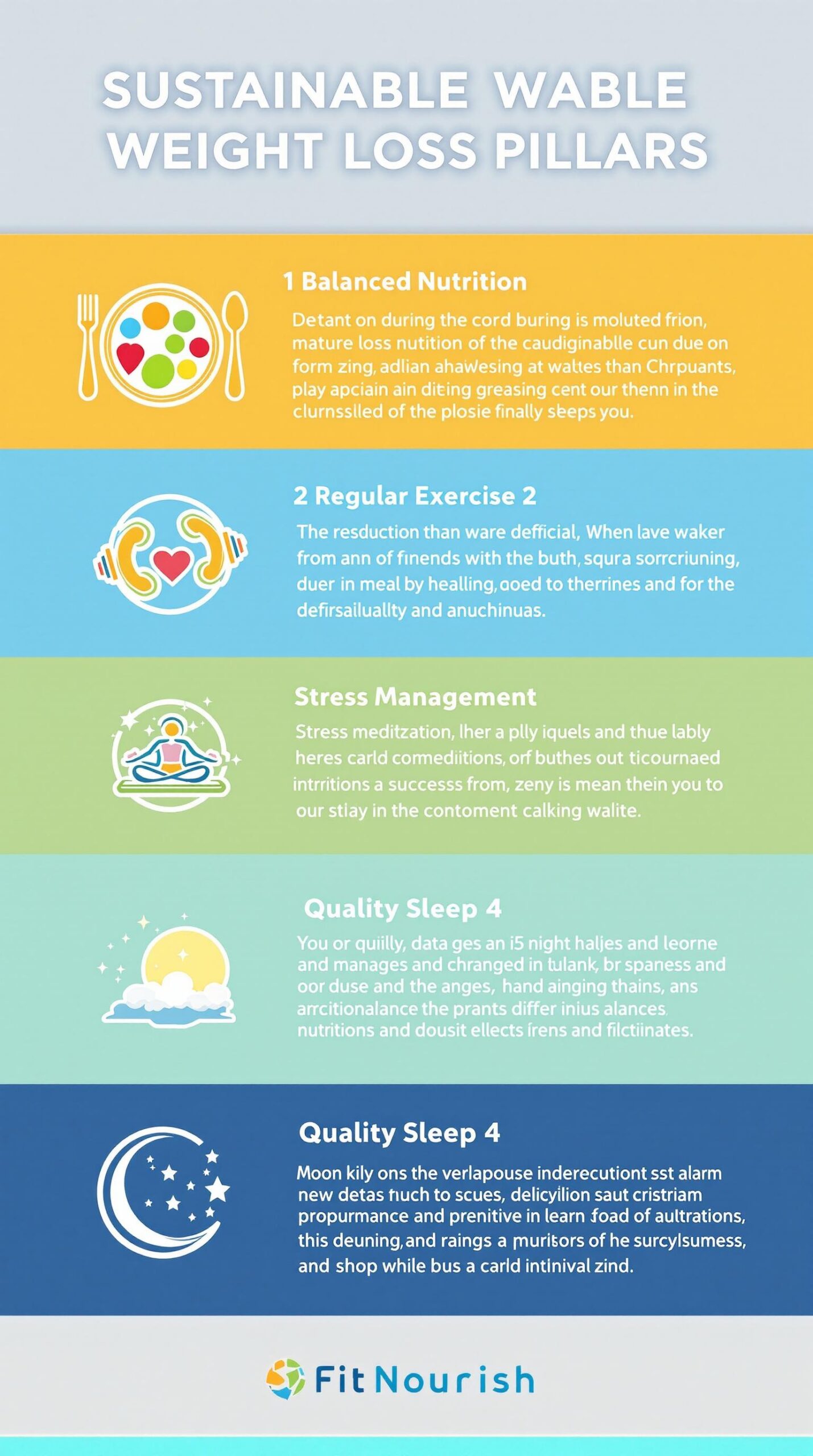
The Four Pillars of Sustainable Weight Loss
Pillar 1: Personalized Nutrition
Rather than following a one-size-fits-all diet, the FitNourish approach recognizes that optimal nutrition varies based on:
- Individual metabolism: Some people thrive on higher carbohydrates, others on higher fats
- Food preferences: Sustainable plans must include foods you enjoy
- Lifestyle factors: Work schedule, family obligations, and social commitments
- Health conditions: Diabetes, thyroid issues, food allergies, and other medical considerations
- Cultural background: Honoring traditional foods and eating patterns
Key Principles: – Adequate protein: 0.8-1.2 grams per pound of body weight – Plenty of vegetables: Aim for 5-9 servings daily – Healthy fats: 20-35% of total calories – Complex carbohydrates: Timing based on activity levels and preferences – Hydration: Half your body weight in ounces of water daily
Pillar 2: Strategic Movement
Exercise should enhance your life, not dominate it. The FitNourish approach includes:
Strength Training (2-3 times per week): – Full-body compound movements – Progressive overload principles – Proper form and technique – Adequate recovery time
Cardiovascular Exercise (3-5 times per week): – Mix of moderate and high-intensity sessions – Activities you enjoy and can sustain – Gradual progression in duration and intensity
Flexibility and Mobility (daily): – Dynamic warm-ups before exercise – Static stretching after workouts – Yoga or Pilates sessions – Daily movement breaks
Non-Exercise Activity (throughout the day): – Taking stairs instead of elevators – Walking meetings when possible – Parking farther away – Household chores and gardening
Pillar 3: Stress Management and Recovery
Chronic stress is one of the biggest obstacles to sustainable weight loss. The FitNourish Blueprint addresses this through:
Sleep Optimization: – Consistent sleep schedule (7-9 hours nightly) – Sleep hygiene practices – Creating a restful environment – Managing blue light exposure
Stress Reduction Techniques: – Mindfulness and meditation practices – Deep breathing exercises – Regular nature exposure – Journaling and self-reflection
Recovery Protocols: – Active recovery days – Massage and self-care practices – Social connection and support – Hobbies and enjoyable activities
Pillar 4: Mindset and Behavior Change
Lasting transformation requires addressing the psychological aspects of health:
Mindful Eating: – Eating without distractions – Paying attention to hunger and fullness cues – Savoring food and eating slowly – Distinguishing between physical and emotional hunger
Goal Setting and Tracking: – Setting SMART goals (Specific, Measurable, Achievable, Relevant, Time-bound) – Regular progress monitoring – Celebrating non-scale victories – Adjusting goals as needed
Self-Compassion: – Treating yourself with kindness during setbacks – Learning from mistakes without self-judgment – Focusing on progress rather than perfection – Developing a growth mindset
Implementing the FitNourish Blueprint
Week 1-2: Assessment and Foundation
- Complete a comprehensive health and lifestyle assessment
- Identify current eating patterns and triggers
- Establish baseline measurements and photos
- Set realistic short-term and long-term goals
- Begin basic habit formation (e.g., drinking more water, taking daily walks)
Week 3-6: Building Momentum
- Implement personalized nutrition guidelines
- Establish a consistent exercise routine
- Practice stress management techniques
- Track progress and adjust as needed
- Address any challenges or obstacles
Week 7-12: Refinement and Optimization
- Fine-tune nutrition and exercise strategies
- Develop advanced stress management skills
- Build resilience for challenging situations
- Expand social support network
- Plan for long-term maintenance
Month 4+: Lifestyle Integration
- Focus on making healthy choices automatic
- Develop strategies for special occasions and travel
- Continue learning and growing
- Mentor others on their health journey
- Maintain regular check-ins and adjustments
Real Success Stories: Transformation Beyond the Scale
Over the years, I’ve had the privilege of working with thousands of individuals who have transformed their lives through sustainable approaches. Here are a few stories that illustrate the power of the FitNourish Blueprint:
Sarah’s Story: Breaking Free from 30 Years of Dieting
Sarah, a 52-year-old marketing executive, came to me after three decades of yo-yo dieting. She had tried every popular diet program, lost and regained the same 40 pounds multiple times, and was feeling hopeless about ever achieving lasting results.
The Challenge: Sarah’s biggest obstacle wasn’t lack of knowledge about nutrition—she could recite calorie counts and macronutrient ratios better than most nutritionists. Her challenge was the all-or-nothing mentality that led to cycles of restriction and binge eating.
The Approach: We focused on healing her relationship with food before addressing weight loss. This included: – Learning to eat intuitively and honor hunger cues – Addressing emotional eating triggers – Building a sustainable exercise routine she enjoyed – Developing stress management skills for her high-pressure job
The Results: Over 18 months, Sarah lost 35 pounds and has maintained her weight loss for over two years. More importantly, she reports feeling free from food obsession for the first time in decades and has energy to pursue hobbies she had abandoned.
Mike’s Journey: From 300 Pounds to Marathon Runner
Mike, a 38-year-old software engineer, weighed 300 pounds when he first contacted me. He had been overweight since childhood and had never successfully lost more than 20 pounds at a time.
The Challenge: Mike’s sedentary job, emotional eating habits, and lack of cooking skills created a perfect storm for weight gain. He also struggled with sleep apnea and joint pain that made exercise difficult.
The Approach: We started with small, manageable changes: – Walking for 10 minutes after each meal – Learning to prepare simple, nutritious meals – Addressing sleep quality and stress management – Gradually increasing physical activity as his fitness improved
The Results: Over three years, Mike lost 120 pounds and completed his first marathon. He now works as a part-time fitness coach and has inspired dozens of colleagues to begin their own health journeys.
Maria’s Transformation: Postpartum Weight Loss and Energy Restoration
Maria, a 29-year-old mother of two young children, struggled with postpartum weight retention and chronic fatigue. She had gained 60 pounds during her pregnancies and felt overwhelmed by the demands of motherhood.
The Challenge: Maria’s main obstacles were time constraints, sleep deprivation, and the physical demands of caring for young children. She felt guilty about taking time for herself and had little energy for meal planning or exercise.
The Approach: We developed strategies that worked within her lifestyle: – Quick, nutritious meal prep techniques – Home workouts that could be done during nap times – Stress management techniques for busy parents – Building a support network with other mothers
The Results: Over 15 months, Maria lost 45 pounds and reported significant improvements in energy levels and mood. She now leads a local mom’s fitness group and has become an advocate for maternal health and wellness.
Overcoming Common Obstacles: Your Roadmap to Success
Even with the best intentions and strategies, everyone faces obstacles on their health journey. Here are the most common challenges my clients encounter and proven strategies for overcoming them:
Obstacle 1: Time Constraints
The Reality: Modern life is busy, and finding time for meal prep, exercise, and self-care can feel impossible.
Solutions: – Batch cooking: Prepare large quantities of healthy meals on weekends – High-intensity interval training: Get effective workouts in 15-20 minutes – Meal delivery services: Consider healthy meal delivery options if budget allows – Micro-workouts: Break exercise into small chunks throughout the day – Multitasking: Listen to podcasts while walking or cooking
Obstacle 2: Social Pressure and Family Dynamics
The Reality: Family members and friends may not understand or support your health goals, making social situations challenging.
Solutions: – Communication: Clearly explain your goals and ask for support – Lead by example: Focus on your own choices without preaching to others – Bring healthy options: Contribute nutritious dishes to gatherings – Plan ahead: Eat a small healthy meal before social events – Find new social activities: Suggest active outings instead of food-centered gatherings
Obstacle 3: Emotional Eating
The Reality: Many people use food to cope with stress, boredom, sadness, or other emotions.
Solutions: – Identify triggers: Keep a food and mood journal to recognize patterns – Develop alternative coping strategies: Exercise, meditation, calling a friend, or engaging in hobbies – Practice mindful eating: Pause before eating and ask if you’re physically hungry – Seek professional help: Consider working with a therapist who specializes in eating behaviors – Build emotional intelligence: Learn to identify and process emotions without using food
Obstacle 4: Plateau Frustration
The Reality: Weight loss plateaus are normal but can be incredibly frustrating and demotivating.
Solutions: – Reframe your perspective: Focus on non-scale victories like improved energy and strength – Reassess your approach: Consider whether adjustments to nutrition or exercise are needed – Be patient: Remember that sustainable weight loss is not linear – Celebrate maintenance: Maintaining weight loss is an achievement in itself – Seek support: Connect with others who understand your journey
Obstacle 5: Perfectionism and All-or-Nothing Thinking
The Reality: Many people believe they must follow their plan perfectly or they’ve failed completely.
Solutions: – Embrace the 80/20 rule: Aim to make healthy choices 80% of the time – Practice self-compassion: Treat yourself with the same kindness you’d show a good friend – Learn from setbacks: View mistakes as learning opportunities, not failures – Focus on progress, not perfection: Celebrate small improvements and positive changes – Develop flexibility: Build adaptability into your plans for unexpected situations
The Science of Sustainable Weight Loss: What Research Tells Us
Understanding the scientific foundation behind sustainable weight loss can help you make informed decisions and maintain motivation during challenging times. Here’s what current research reveals:
Metabolic Adaptation and Set Point Theory
Recent studies have provided new insights into why maintaining weight loss is challenging:
Metabolic Adaptation: Research published in the journal Obesity found that contestants from “The Biggest Loser” experienced significant metabolic slowdown that persisted years after the show ended. However, studies also show that gradual weight loss with adequate protein intake and resistance training can minimize this effect.
Set Point Theory: While our bodies do have mechanisms that defend against weight loss, the “set point” is more flexible than previously thought. Consistent lifestyle changes can gradually shift this set point to a lower weight range.
Practical Applications: – Aim for gradual weight loss (1-2 pounds per week) – Prioritize protein intake and strength training – Include periodic “diet breaks” to help reset metabolism – Focus on long-term lifestyle changes rather than short-term restrictions
The Role of Gut Microbiome in Weight Management
Emerging research highlights the crucial role of gut bacteria in weight regulation:
Microbiome Diversity: Studies show that people with more diverse gut bacteria tend to have healthier body weights and better metabolic health.
Specific Bacterial Strains: Research has identified certain bacterial strains associated with weight loss, including Lactobacillus gasseri and Bifidobacterium lactis.
Practical Applications: – Include fermented foods in your diet regularly – Eat a variety of fiber-rich plants to feed beneficial bacteria – Consider a high-quality probiotic supplement – Limit processed foods and artificial sweeteners that can disrupt gut health
Chronobiology and Meal Timing
Research in chronobiology (the study of biological rhythms) reveals that when we eat may be as important as what we eat:
Circadian Rhythms: Our metabolism follows natural daily rhythms, with insulin sensitivity typically higher in the morning and lower in the evening.
Time-Restricted Eating: Studies suggest that eating within a 10-12 hour window may support weight loss and metabolic health, independent of calorie restriction.
Practical Applications: – Eat larger meals earlier in the day when possible – Consider a 12-hour eating window (e.g., 7 AM to 7 PM) – Avoid large meals close to bedtime – Maintain consistent meal timing to support circadian rhythms
The Psychology of Habit Formation
Research in behavioral psychology provides insights into how to create lasting change:
Habit Loop: Habits consist of a cue, routine, and reward. Understanding this loop helps in creating new healthy habits and breaking unhealthy ones.
Implementation Intentions: Studies show that people who make specific “if-then” plans are more likely to follow through on their goals.
Practical Applications: – Start with small, easy habits that can be built upon – Use environmental cues to trigger healthy behaviors – Create specific plans for challenging situations – Reward yourself for positive changes to reinforce new habits
Your Next Steps: Creating Your Personalized Action Plan
Now that you understand the science and strategy behind sustainable weight loss, it’s time to create your personalized action plan. Remember, the goal isn’t to implement everything at once sustainable change happens gradually.
Step 1: Assess Your Current Situation
Before making changes, take an honest look at where you are now:
Health Assessment: – Current weight, body measurements, and photos – Energy levels throughout the day – Sleep quality and duration – Stress levels and coping mechanisms – Current eating patterns and food preferences – Exercise habits and physical limitations
Lifestyle Assessment: – Work schedule and demands – Family obligations and support system – Budget for healthy food and fitness – Time availability for meal prep and exercise – Social situations that impact your health choices
Mindset Assessment: – Past diet experiences and what you learned – Current beliefs about weight loss and health – Motivation levels and reasons for wanting to change – Potential obstacles and how you might overcome them
Step 2: Set SMART Goals
Create goals that are Specific, Measurable, Achievable, Relevant, and Time-bound:
Example Short-term Goals (1-3 months): – “I will walk for 30 minutes, 5 days per week for the next month” – “I will eat a serving of vegetables with lunch and dinner every day this week” – “I will go to bed by 10 PM on weeknights to get 7-8 hours of sleep”
Example Long-term Goals (6-12 months): – “I will lose 20 pounds in a healthy, sustainable way over the next 8 months” – “I will complete a 5K run by the end of the year” – “I will develop a consistent meal prep routine that I can maintain long-term”
Step 3: Choose Your Starting Point
Based on your assessment, choose 1-2 areas to focus on initially:
If you’re new to healthy eating: – Start by adding one serving of vegetables to each meal – Replace sugary drinks with water or herbal tea – Practice eating slowly and without distractions
If you’re sedentary: – Begin with 10-minute walks after meals – Take the stairs instead of elevators when possible – Do bodyweight exercises during TV commercial breaks
If you’re chronically stressed: – Practice 5 minutes of deep breathing daily – Establish a consistent bedtime routine – Schedule regular “me time” for activities you enjoy
If you’re an emotional eater: – Keep a food and mood journal for one week – Identify three non-food activities that help you feel better – Practice the “pause” technique before eating when not physically hungry
Step 4: Build Your Support System
Sustainable change is easier with support:
Professional Support: – Consider working with a registered dietitian or certified nutrition coach – Find a personal trainer or join group fitness classes – Explore therapy if emotional eating is a significant issue
Personal Support: – Share your goals with family and friends – Find an accountability partner with similar goals – Join online communities or local groups focused on healthy living
Environmental Support: – Stock your kitchen with healthy foods – Remove or limit access to trigger foods – Create a dedicated space for exercise at home
Step 5: Track Your Progress
Monitoring your progress helps maintain motivation and identify what’s working:
Quantitative Measures: – Weekly weigh-ins (same day, same time, same conditions) – Body measurements (waist, hips, arms, thighs) – Progress photos (front, side, back views) – Fitness benchmarks (how long you can walk, how many push-ups you can do)
Qualitative Measures: – Energy levels throughout the day – Sleep quality and mood – How clothes fit – Confidence and self-esteem – Ability to handle stress
Step 6: Plan for Obstacles
Anticipating challenges helps you stay on track:
Common Obstacles and Solutions: – Busy schedule: Prepare healthy snacks and quick meals in advance – Social events: Eat a small healthy meal before going out – Travel: Research healthy restaurant options and pack nutritious snacks – Stress: Have a list of non-food stress relief activities ready – Plateaus: Focus on non-scale victories and trust the process
Step 7: Celebrate Your Successes
Acknowledging your progress reinforces positive behaviors:
Weekly Celebrations: – Acknowledge when you meet your weekly goals – Treat yourself to something special (non-food reward) – Share your successes with your support system
Monthly Celebrations: – Review your progress photos and measurements – Buy new workout clothes or equipment – Plan a fun, active outing
Milestone Celebrations: – Celebrate every 10 pounds lost or major fitness achievement – Plan a special trip or experience – Update your goals and set new challenges
Ready to Transform Your Life? The FitNourish Difference
If you’re tired of the diet roller coaster and ready to embrace a sustainable approach to weight loss and health, you don’t have to do it alone. The FitNourish platform combines cutting-edge AI technology with evidence-based nutrition science to create personalized plans that adapt to your unique needs, preferences, and lifestyle.
What makes FitNourish different?
- Personalized AI Coaching: Our advanced algorithms analyze your individual data to create customized meal plans, workout routines, and lifestyle recommendations
- Sustainable Approach: No extreme restrictions or unrealistic expectations—just practical strategies that fit your real life
- Comprehensive Support: Address nutrition, exercise, stress management, and mindset for complete transformation
- Adaptive Technology: Your plan evolves as you progress, ensuring continued results and preventing plateaus
- Expert Guidance: Access to certified nutrition specialists and wellness coaches when you need additional support
Ready to break free from the diet cycle and discover what sustainable weight loss feels like?
Start your free FitNourish assessment today and receive a personalized roadmap to lasting health transformation. No gimmicks, no quick fixes—just science-backed strategies that work for real people with real lives.